
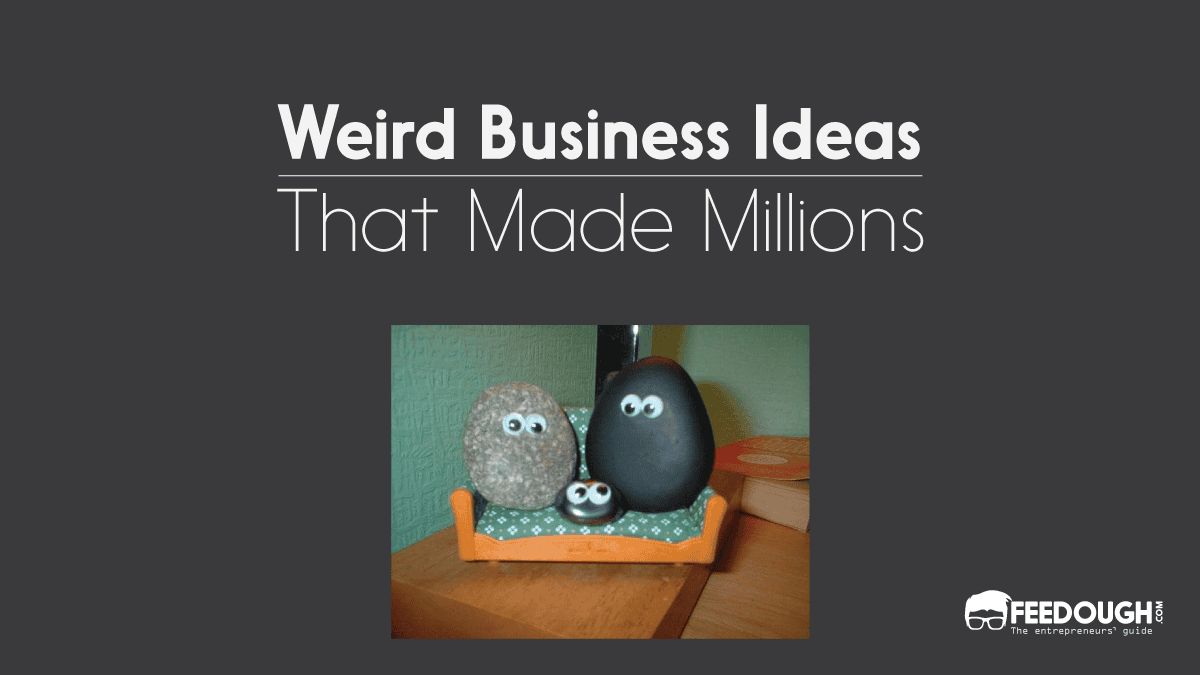

In a world full of conventional business advice, some of the most outrageous and unconventional concepts have turned ordinary people into millionaires. Weird Business Ideas That Made Millions prove that creativity, timing, and bold execution can trump traditional logic. From selling rocks as pets to mailing personalized messages on potatoes, these success stories show that thinking outside the box — or completely ignoring it — can lead to extraordinary financial rewards. This article explores some of the most bizarre yet highly profitable ventures, their origins, strategies, and the valuable lessons they offer aspiring entrepreneurs.
Some ideas sound too strange to succeed. But sometimes, the oddest ideas win. These weird business ideas made millions!
Pet Rock: A Stone that Made Millions
In 1975, Gary Dahl had a strange idea. He thought of selling rocks as pets. Yes, rocks!
Pet Rocks came in a box. The box had air holes. People loved the humor. It became a huge hit.
Gary Dahl made $15 million in six months. All from selling simple rocks. This idea shows that fun sells.
The Million Dollar Homepage: Pixel by Pixel to Riches
In 2005, British student Alex Tew needed money for university. His solution? Create a website with one million pixels and sell them for $1 each.The Million Dollar Homepage was a simple grid where buyers could place a 10×10 pixel image linking to their site. Alex promoted it with a press release, and media outlets like BBC picked it up. The novelty went viral.Within months, the site sold out completely. The final 1,000 pixels auctioned on eBay for over $38,000. Alex made over $1 million in just a few months, funding his education and becoming an internet sensation.
Key Lesson: Simplicity combined with virality can explode. The idea leveraged early internet culture, scarcity (pixels sold out), and media attention. Copycats emerged, but the original captured the magic.
Poo-Pourri: The Toilet Spray That Smells Like Victory
Snuggie: The Blanket with Sleeves
Snuggie is a blanket with sleeves. It sounds funny, right?
Many people laughed at first. But soon, everyone wanted one. It kept people warm and cozy.
Snuggie sold millions of units. It made over $200 million. This proves comfort can be profitable.
Ant Farm: A Peek into Ant Life
Milton Levine had a unique idea in 1956. He created the Ant Farm.
People could watch ants build tunnels. It was educational and fun.
The Ant Farm sold over 20 million units. It brought nature into homes. A simple idea with big success.
3. Doggles: Sunglasses for Dogs
Doggles are sunglasses for dogs. Sounds silly, but they work.
Dogs use them for sun protection. They also protect from wind and debris.
Doggles became popular with pet owners. They made millions in sales. A niche market with a big impact.
I Can’t Believe It’s Not Butter
This product has a strange name. But it caught people’s attention.
It is a butter substitute. It tastes like butter but has fewer calories.
People loved the taste. The brand made millions. A clever name can make a difference.
The Million-Dollar Homepage
In 2005, Alex Tew had a simple idea. He sold pixels on a webpage. Each pixel cost $1.
Companies bought space to advertise. The page had one million pixels.
Alex made $1 million. A creative way to use the internet.
Santa Mail: Letters from Santa
Byron Reese started Santa Mail. It sends letters from Santa to children.
Parents pay for the service. Kids receive personalized letters.
Over 300,000 letters are sent each year. It brings joy and profits.
Imaginary Friend: A Friend for Lonely Kids
Some businesses offer imaginary friends. They create custom stories for children.
These services help lonely kids. They give comfort and companionship.
It is a unique idea with a growing market. Creativity helps children feel less alone.
Rent-a-Chicken: Try Chicken Raising at Home
This business rents chickens. Families can try raising chickens at home.
It includes a coop, food, and chickens. People learn about egg production.
Rent-a-Chicken is popular with families. It combines education with fun.
Ship Your Enemies Glitter
Matthew Carpenter had a funny idea. He created Ship Your Enemies Glitter.
People pay to send glitter to someone. The glitter is messy and hard to clean.
It became an internet sensation. The website made thousands in days.

Credit: blog.printsome.com